Edinburgh shoulder season — the months between the August festival peak and the deep winter trough — is the secret to getting the best Edinburgh experience for the lowest cost. Hotel prices drop 40–60% from August rates. Restaurants take walk-ins again. The Castle has shorter queues. The weather is still reasonable. And the city’s residents reclaim their streets in a way that visitors only get to see if they pick the right weeks. This guide identifies Edinburgh’s true shoulder periods, the specific weeks worth targeting, the mini-peaks to avoid, and the savings strategy that turns a £400-a-night August room into a £130-a-night September room — same room, same view, often the same restaurant table later in the evening.
What is a Shoulder Season?
“Shoulder season” is the travel industry term for the periods immediately before and after peak season — when demand has eased but the basic visitor experience (sights open, restaurants running normal hours, public transport at full frequency) remains intact. For Edinburgh, this means two distinct windows:
- Spring shoulder: mid-March to mid-May (between winter off-peak and the early-summer pre-peak ramp-up).
- Autumn shoulder: September after the Fringe ends, through October and early November (between peak festival August and Christmas-market mid-November).
The exact dates shift slightly year-to-year depending on Easter, the Fringe schedule, and rugby fixtures, but the broad windows are reliable.
Why Edinburgh Shoulder Season Is the Best Choice
Three reasons make Edinburgh’s shoulder season unusually rewarding:
1. The Price Drop is Dramatic
August Festival accommodation typically runs 2–3x the cost of equivalent rooms in October or April. A central 4-star hotel that charges £350/night in August will often offer the same room at £130–£180 in October, frequently with breakfast included. Restaurants run lunch and pre-theatre deals that simply do not exist in peak. Tour-bus and walking-tour operators offer shoulder-season promotions.
2. The Experience is Different
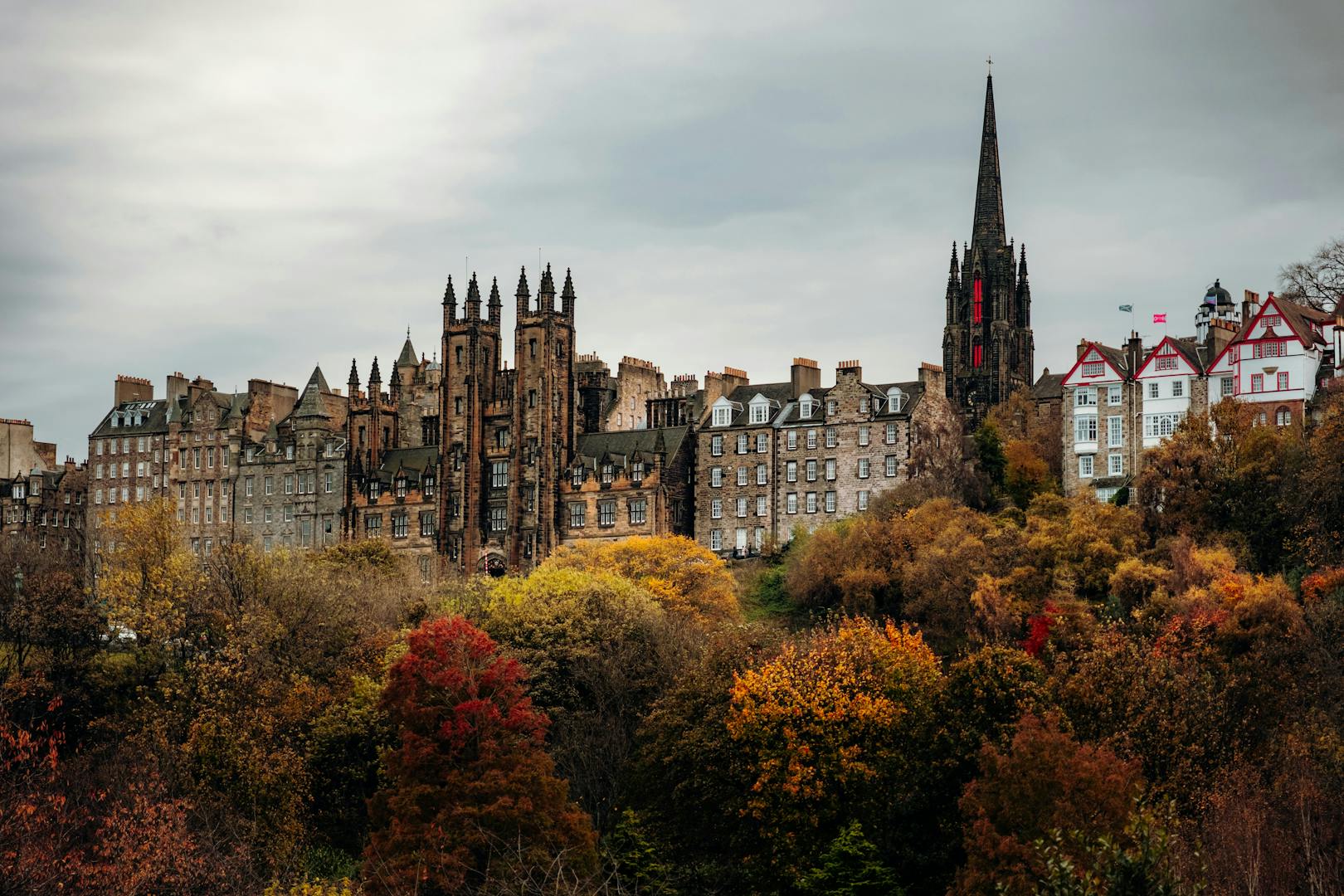
Festival Edinburgh is theatrical and densely packed; shoulder Edinburgh is reflective and city-paced. The Castle in October light, the Royal Botanic Garden in May, the Water of Leith in early autumn — these are the postcards that get sent home, and they are easier to enjoy without 30,000 fellow visitors competing for the same view.
3. The Locals Are Happier
Edinburghers — like residents of any tourist city — are warmer hosts in shoulder season than in peak. Restaurants take walk-ins. Bartenders chat. The Royal Mile street performers actually have time to engage rather than performing every 15 minutes for ten different crowds. The conversations you have with locals in shoulder season tend to be the ones you remember.
Edinburgh’s Calendar of Peaks and Troughs
To understand the shoulder windows, it helps to see the full year’s demand pattern:
| Period | Demand | Typical 4-star room rate |
|---|---|---|
| 1–7 January (post-Hogmanay) | Low | £75–£120 |
| 8–31 January | Very low (off-peak) | £70–£110 |
| February (excluding rugby weekends) | Low | £85–£130 |
| March (excluding rugby weekends) | Spring shoulder | £100–£160 |
| April (excluding Easter) | Spring shoulder | £120–£180 |
| May (excluding bank holidays) | Spring shoulder rising | £140–£200 |
| June | Pre-peak | £150–£220 |
| July | Peak rising | £170–£260 |
| August (Festival) | Highest peak | £280–£550 |
| September 1–7 (festival tail) | Peak tail | £200–£300 |
| September 8 to early November | Autumn shoulder | £100–£170 |
| Mid–late November (Christmas markets open) | Rising again | £140–£200 |
| December (markets) | High | £180–£260 |
| 29–31 December (Hogmanay) | Spike | £300–£600+ |
The two windows with the best price-to-experience ratio are clearly visible: April–early May and September 8–early November. These are Edinburgh’s true shoulder seasons.
The Spring Shoulder: Late March to Mid-May
The spring shoulder begins as Edinburgh emerges from its dark winter. Daylight stretches noticeably, the first daffodils appear in Princes Street Gardens, the city’s outdoor culture starts to reawaken, and hotel prices remain low.
The Best Spring Shoulder Weeks
- Mid-March (avoiding the Six Nations final round): very low prices, lengthening daylight.
- The first three weeks of April (avoiding Easter): cherry blossom, mild weather, lowest April prices.
- Early May (avoiding May bank holidays): spectacular weather, low rainfall, full daylight.
What to Expect
- Daffodils mid-March; cherry blossom mid-April; bluebells early May.
- Daylight: 12 hours (mid-March) → 16 hours (mid-May).
- Temperatures: 9°C (March highs) → 14°C (May highs).
- Rainfall: 39–40 mm per month, mostly light.
- Cultural events: Edinburgh International Science Festival (late March–mid April), Beltane Fire Festival (30 April).
Mini-Peaks to Avoid
- Six Nations Rugby final round (March): hotels around Murrayfield 2x normal price.
- Easter weekend: family travel demand pushes prices up.
- May bank holidays (early and late May): both add a weekend bump.
- Edinburgh Marathon Festival (last weekend of May): start/finish area hotels spike.
The Autumn Shoulder: 8 September to Mid-November
The autumn shoulder is arguably Edinburgh’s single best window. The Fringe is over, prices have dropped, and the weather can still feel summery in early September.
The Best Autumn Shoulder Weeks
- 8–30 September (locals’ favourite weeks): 30–40% cheaper than August, often warmer weather.
- The first two weeks of October (before half-term): autumn colour building, hotels very reasonably priced.
- The last two weeks of October (post-half-term): autumn colour at peak.
- First three weeks of November (before Christmas markets): cheapest autumn window.
What to Expect
- September: warm light, daylight 12–13 hours, autumn colour beginning in last week.
- October: 11°C highs, autumn colour at peak mid-month, daylight 9–11 hours.
- November: 9°C highs, dark by 17:00, Christmas markets in the third week.
- Cultural events: Doors Open Days (late September), Scottish Storytelling Festival (late October), Halloween (31 October), Bonfire Night (5 November), St Andrew’s Day (30 November).
Mini-Peaks to Avoid
- Fringe last weekend (first weekend of September): still busy.
- School October half-term (mid-October): families fill family-friendly attractions.
- Six Nations rugby (later autumn — sometimes returns in November).
- St Andrew’s Day weekend (around 30 November): hotel prices climb.
- Christmas markets opening week (third week of November): demand starts to rise.
Specific Money-Saving Strategies
1. Book the Cheapest Window You Can
September 8–24 is the single cheapest week-to-week window in Edinburgh’s calendar that still gives you decent weather and full attraction opening hours. October 14–30 (post-half-term) is the second cheapest with autumn colour included. November 1–20 (pre-Christmas markets) is the third cheapest, with the trade-off of shorter days.
2. Avoid Weekends
Tuesday–Thursday nights are typically 20–30% cheaper than Friday–Sunday in shoulder season. A four-night Tuesday–Friday trip will often cost less than a three-night Friday–Sunday weekend.
3. Stay Just Outside the Centre
Hotels in Leith, Stockbridge, Bruntsfield and Newington offer the same quality of room at 30–50% lower shoulder-season prices. The tram and bus network put the city centre 10–15 minutes away.
4. Use the Tram Hotel Trick
Hotels at Edinburgh Park, Edinburgh Gateway, and Ingliston are connected to the centre by tram in 15–25 minutes. Prices are often 40% below central rates. Apex, Holiday Inn Express, Premier Inn, Marriott and Crowne Plaza all have tram-connected suburban locations.
5. Book Restaurants on the App
OpenTable, Resy, Bookatable and Yelp Reservations all offer shoulder-season restaurant promotions in Edinburgh — typically 25–40% off the bill, free welcome drinks, or pre-theatre deals. Many Michelin restaurants offer their lowest tasting-menu prices in September.
6. Look for Hotel Package Deals
Most central hotels run shoulder-season packages — Bed & Breakfast (typically £15–£25 added to room price for breakfast), Dinner Inclusive, Spa Package, Castle Ticket Package. The packages are often 20–40% cheaper than the same components booked separately.
7. Buy Attraction Passes
The Edinburgh Pass (1–3 days, £49–£79) bundles entry to 25+ attractions plus airport transport. In shoulder season, when you can use it across the most attractions in shortest queues, the value is highest.
8. Take Advantage of “Quiet Tuesday” Promotions
Several Edinburgh attractions run discounted Tuesday rates in shoulder season. Check the Castle, Mary King’s Close and the Scotch Whisky Experience individually.
Comparing Shoulder Season vs Peak vs Off-Peak
Peak (August)
- High prices (2–3x baseline).
- High crowds (Festival energy, dense Royal Mile).
- Maximum cultural offering (3,500+ Fringe shows).
- Restaurants need bookings 1–2 weeks ahead.
- Tickets to major sights need booking.
- Atmospheric: unrepeatable, intense.
Shoulder (April–early May, September–early November)
- Moderate prices (baseline to 1.3x baseline).
- Manageable crowds.
- Decent weather (March windier than October; both have rain).
- Restaurants walk-in friendly.
- Major sights open with shorter queues.
- Atmospheric: relaxed, breathable.
Off-Peak (mid-November–early March, excluding Hogmanay/markets)
- Low prices (often below baseline).
- Lowest crowds.
- Cold weather; short days.
- Excellent restaurant deals (Burns Night, January promotions).
- Some restricted attraction hours; museums and galleries open.
- Atmospheric: introspective, cosy.
The Hidden Sub-Shoulders
Within the broad shoulder seasons, there are “sub-shoulders” — weeks that are even quieter than the average shoulder week:
The First Week of September
Many Festival-goers leave on the first Monday or Tuesday. By Wednesday of week one of September, the city has reset. Hotel prices fall by 50% from the weekend before. Restaurants are easy. The weather is often the warmest of the year.
The Week After October Half-Term
Families return home; the city is calm. Autumn colour is at peak. Halloween events are starting to advertise but not yet busy. Mid-late October is often Edinburgh’s most atmospheric week.
The First Half of November
Before the Christmas markets open in the third week, November has a quiet hush. Lots of indoor and theatre options, low prices, restaurants in early-evening calm.
The Last Week of January
Burns Night week is a hidden shoulder-within-off-peak — the city has events to attend but is not crowded, and prices are at their lowest of the entire year.
Booking Timing for Maximum Savings
For shoulder-season Edinburgh travel:
- Book hotels 4–8 weeks ahead — early enough to get choice, late enough to catch promotion drops.
- Book flights/trains 6–12 weeks ahead — UK domestic flights and rail have advance fares that drop dramatically with early booking.
- Book Edinburgh Castle, Mary King’s Close, Tattoo at least 2 weeks ahead even in shoulder.
- Restaurants typically take walk-ins in shoulder but bookings preferred for prime tables.
- Last-minute weekend deals often surface 7–10 days before travel; sign up to hotel newsletters.
Shoulder Season Day Trips
Shoulder season is the best window for day trips from Edinburgh:
- Highlands tours — manageable group sizes, the best autumn light, less midge pressure than summer.
- Stirling and Wallace Monument — quieter, autumn or spring colour around the castle.
- St Andrews — affordable accommodation if you stay overnight, golf without queues.
- Loch Ness — accessible by train and tour, quieter than summer.
- North Berwick — beach without summer-crowd queues at the Seabird Centre.
- Rosslyn Chapel — manageable visitor numbers, atmospheric autumn light.
- South Queensferry — Forth Bridges photography, harbourside pubs.
Booking the Right Hotel for Shoulder Season
Some hotels offer the most dramatic shoulder-season discounts. Worth checking:
- Apex Hotels (Grassmarket, Waterloo Place, Haymarket) — strong shoulder promotions.
- Premier Inn (multiple locations) — best-value shoulder rates from £75/night.
- Marriott Edinburgh — large Marriott discounts in October/November.
- Sheraton Grand (Lothian Road) — spa-package deals in shoulder.
- The Bonham in Drumsheugh — boutique with mid-week autumn deals.
- Eden Locke / Locke at Broughton — design aparthotels with seasonal pricing.
- Kimpton Charlotte Square — boutique luxury with shoulder-season promotions.
- The Witchery by the Castle — even The Witchery’s themed suites drop 20–30% in shoulder.
What Shoulder Season Visitors Miss (and Don’t)
Genuinely Missed
- The Fringe Festival (August).
- The Edinburgh Military Tattoo (August).
- Hogmanay (31 December).
- The Christmas markets (mid-November to early January).
- Long summer evenings (June solstice 22:00 sunsets).
- Warmest weather (mid-July to mid-August).
Easily Not Missed (or Found Elsewhere)
- Crowded Royal Mile — calm and walkable in shoulder.
- £400 hotel rooms — replaced with £130 equivalents.
- Tour-bus queues — much shorter.
- Restaurant scrambles for tables.
- The annual photo of Royal Mile fully packed (still possible in early September).
Shoulder Season Tips From Edinburgh Locals
- “Eat early or late — shoulder season makes 18:00 and 21:30 the empty windows when chefs want walk-ins.”
- “The first Tuesday of September is the year’s biggest reset day. Walk-ins everywhere.”
- “Mid-October autumn colour at the Botanic Garden is one of Edinburgh’s two-or-three best weeks.”
- “Three-day shoulder trip Wednesday–Friday saves a fortune vs Friday–Sunday.”
- “Book the Castle for 09:30 in September — first slot, smallest crowd.”
- “Edinburgh Gin distillery tours open up in shoulder — great combined with The Lookout.”
What Shoulder Season Looks Like in Practice
A typical shoulder-season Edinburgh weekend might look like:
Sample Weekend: Thursday–Sunday, 12–15 October
- Thursday afternoon: arrive Waverley 14:00, check into a £130/night Old Town hotel.
- Thursday evening: walk to Calton Hill sunset; dinner at Howies on Victoria Street (walk-in OK at 19:30).
- Friday morning: Castle 09:30, exit by 11:30; coffee on the Royal Mile.
- Friday afternoon: National Museum (free), then Stockbridge for autumn walk through Dean Village.
- Friday evening: dinner at The Outsider (book Friday evening at 19:00); whisky at the Bow Bar.
- Saturday morning: Royal Botanic Garden at peak autumn colour; brunch at The Pantry.
- Saturday afternoon: hop on hop off bus tour around Holyrood, the Britannia, or onward to Leith.
- Saturday evening: dinner at Heron in Leith (book ahead); cocktails at the Tabac.
- Sunday morning: Arthur’s Seat hike; lunch at The Sheep Heid Inn.
- Sunday afternoon: Stockbridge market or the National Galleries; train home.
Total estimated cost for a couple: £550 for 3 nights’ hotel + £350 food + £80 attractions + £40 transport = around £1,020. The same weekend in August would run £1,800–£2,200.
Frequently Asked Questions
When is Edinburgh’s shoulder season?
Late March to mid-May (spring shoulder) and 8 September to mid-November (autumn shoulder).
How much do hotels cost in Edinburgh shoulder season?
Typically £100–£170/night for a central 4-star, compared to £280–£550/night in August.
What is the cheapest week to visit Edinburgh?
The second and third weeks of January are the cheapest of the entire year. The cheapest shoulder weeks are 8–24 September and 14–30 October.
Is the weather good in Edinburgh shoulder season?
Generally yes — September often has the warmest weather of the year; October offers cool but mostly dry conditions; April–May is dry with growing daylight.
Are the festivals still on in shoulder season?
The main August festivals end by the first week of September. Shoulder season has its own calendar — Doors Open Days, Storytelling Festival, Beltane Fire Festival — but at a smaller scale than August.
Can I see all the major Edinburgh sights in shoulder season?
Yes — Castle, Mary King’s Close, Holyrood Palace, Royal Yacht Britannia and all the museums and galleries operate normal hours.
Are Edinburgh restaurants quieter in shoulder season?
Yes — walk-ins become possible, pre-theatre menus are widely available, and chefs welcome walk-in early diners.
What’s the best shoulder month for first-time Edinburgh visitors?
Late September: warm enough for outdoor activities, low prices, autumn colour starting, restaurants at full capacity.
Is October crowded in Edinburgh?
Mid-October half-term week is busier (families). Otherwise October is one of the quieter, cheaper months.
Should I book hotels in advance for shoulder season?
4–8 weeks ahead is usually optimal. Last-minute deals do appear but the best central rooms book early.
Final Word: Smart Travellers Choose the Shoulder
Festival August is unforgettable. Christmas Edinburgh is romantic. Hogmanay is iconic. But the savvy traveller — the one who wants Edinburgh’s full character at a reasonable price, with reasonable weather, and without competing with 30,000 other visitors for every photograph — picks shoulder season. Late September, mid-October, the first half of November, or April-into-May: pick any of those windows and you’ll get a richer, calmer, cheaper Edinburgh that locals genuinely enjoy too.
For full season context, see our Edinburgh weather by month guide, the dedicated Edinburgh in autumn piece, the Edinburgh in spring guide, and our peak vs off-season comparison. For accommodation in any season, see our Where to Stay hub.