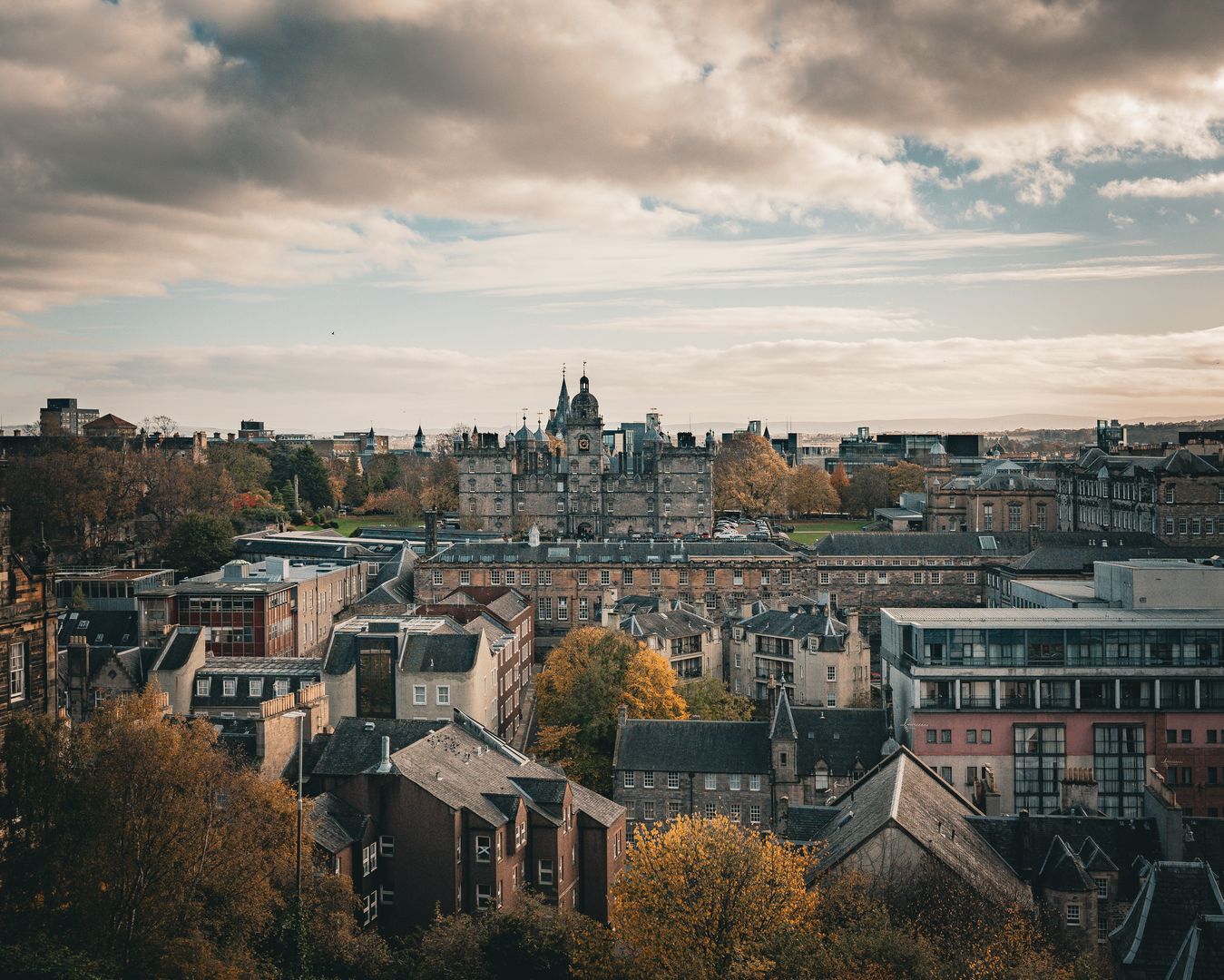
Edinburgh’s weather is the topic locals will talk about, joke about, and politely apologise for from the moment you arrive. The reality is more nuanced than the city’s “always grey, always raining” reputation: Edinburgh is actually one of the driest major cities in the UK, with annual rainfall under 700mm — less than London, Cardiff or Manchester. But it is also exposed to the North Sea on its eastern flank, the Firth of Forth’s microclimate, and the Atlantic systems that sweep across Scotland from the west. This guide covers Edinburgh weather by month in detail — average temperatures, rainfall, daylight, wind, what to pack, what events to plan for, and which day trips work in which season.
Edinburgh Weather at a Glance
Edinburgh has a temperate maritime climate — mild summers, cool winters, frequent wind, regular rain but rarely heavy, and dramatic short-term variability (“four seasons in a day” is a real thing). The numbers behind the perception:
- Annual average max: 12.5°C
- Annual average min: 5.5°C
- Annual rainfall: approximately 668 mm (compared to London’s 622 mm, Glasgow’s 1,124 mm)
- Days with rain: approximately 175 a year (compared to Manchester’s 156, Glasgow’s 200)
- Daylight at midsummer: 17 hours 36 minutes (sunset around 22:00)
- Daylight at midwinter: 6 hours 57 minutes (sunset around 15:40)
- Snow days: approximately 22 a year, mostly in January and February
- Windiest months: December–February
Edinburgh Microclimate Factors
Edinburgh sits at 55.95°N, which is the same latitude as Moscow and Hudson Bay — yet the climate is milder than either because of the Gulf Stream’s effect on the British Isles. The city’s specific microclimate is shaped by:
- The Firth of Forth: moderates extremes — fewer frosts in coastal areas, but sea-fog (haar) can roll in suddenly in spring and summer.
- Arthur’s Seat and the Pentlands: create rain-shadow effects; central Edinburgh is often noticeably drier than Glasgow.
- The North Sea: brings cool easterly winds that can drop summer temperatures by 5–8°C in an afternoon.
- Atlantic systems: mainly affect the west of Scotland; Edinburgh often catches the tail end with mixed sun and showers.
January in Edinburgh
January is Edinburgh’s coldest month. The average daily high is 6°C, the average low is 1°C, and night frosts are common. There are typically 1–2 days of snow accumulation in the city. Daylight runs from about 08:45 to 15:50, giving you 7 hours of usable light. Wind chill is the bigger factor than temperature itself; on a still January day at -1°C the city feels manageable, but with the wind pumping in from the Forth at force 6 it can feel like -10°C.
What to pack: warm coat, scarf, gloves, hat, waterproof layer, thermal underlayer for outdoor days. Boots or grippy shoes for occasional ice.
What’s happening: January is a quiet month — post-Hogmanay calm, with Burns Night events around 25 January (Robbie Burns supper menus across the city’s pubs and restaurants). Edinburgh’s January Sales run for the first two weeks. Museums and galleries are usefully uncrowded; the Castle and most major sights have shorter queues. Edinburgh Royal Botanic Garden is dramatically beautiful in frost.
Best day trips: Stay close to the city — the weather is unpredictable for longer excursions. Stirling Castle in winter light is striking.
February in Edinburgh
February brings similar conditions to January — average high 6°C, low 1°C — but daylight is noticeably stretching, reaching 9 hours 30 minutes by month-end. The first snowdrops appear in Princes Street Gardens in mid-month. Rainfall averages around 45 mm. February is also one of Edinburgh’s calmer months tourism-wise; hotel prices dip and the city feels quieter.
What to pack: as January, with a slightly lighter waterproof layer for the longer afternoons.
What’s happening: the Six Nations Rugby Championship dominates Murrayfield weekends in February and March, packing the city for international matches against England, Wales, France, Ireland and Italy. Hotels around Murrayfield sell out quickly for match weekends.
Best day trips: the Borders Railway to Galashiels, for the textile mills and museum. Crisp days at the Forth Bridges give clear photography.
March in Edinburgh
March is a month of dramatic transitions. Early March can still feel like winter — frost, brief snow showers, biting wind. By month-end the temperature climbs to highs of 9–11°C, daylight reaches 12 hours, and the city starts to look like spring. Daffodils carpet Princes Street Gardens by the third week. Average rainfall is 39 mm.
What to pack: Layers are essential. Waterproof jacket, light hat and gloves for cold mornings, sunglasses for the lengthening afternoons.
What’s happening: Edinburgh International Science Festival kicks off in late March. The Six Nations concludes. Clock-change weekend (last Sunday in March) is a landmark — losing an hour but gaining an extra evening hour of light.
Best day trips: the Royal Botanic Garden for first spring colour. Linlithgow Palace and Loch on a clear day. The Forth Bridges by the Maid of the Forth boat trip starts mid-month.
April in Edinburgh
April is properly spring. Average high 11°C, average low 4°C. Daylight reaches 14 hours by month-end. Famous “April showers” do appear, but Edinburgh’s April is drier than England’s — typically 39 mm rainfall. Cherry blossom blooms in Princes Street Gardens, Holyrood Park and the Meadows. Easter falls in late March or April and Edinburgh’s tourist season properly begins.
What to pack: Spring layers — light jumper, waterproof jacket, comfortable walking shoes. Sunglasses essential.
What’s happening: Edinburgh International Science Festival continues through early April. The Royal Highland Show preparations start at Ingliston. Edinburgh’s Beltane Fire Festival on 30 April is a spectacular pagan revival on Calton Hill — booking ahead recommended.
Best day trips: Anywhere — April is a great month for the Highlands (Loch Ness and Glencoe are uncrowded), the Borders (Melrose Abbey), and the coastal walks of East Lothian.
May in Edinburgh
May is often the unsung hero of Edinburgh’s weather year. Average high climbs to 14°C, low to 6°C, daylight runs from 05:00 to 21:30, and rainfall drops to its lowest annual average (around 40 mm). The city feels green, lush, and full of spring colour. May tends to be drier than June and July.
What to pack: light layers, a thin waterproof, sunscreen, sunglasses. Long evenings mean dinner outdoors is possible by mid-month.
What’s happening: the Edinburgh International Children’s Festival, the Imaginate Festival, the Edinburgh Marathon Festival weekend, and the Hidden Door Festival all anchor the late-spring cultural calendar.
Best day trips: The Trossachs and Loch Lomond come into bloom. The bluebells of Roslin Glen are at their peak in mid-May. East Lothian’s beaches start to draw weekend visitors.
June in Edinburgh
June brings the summer solstice (21 June) — Edinburgh enjoys 17 hours 36 minutes of daylight on the longest day, with the sun setting around 22:00 and twilight lingering past 23:00. Average high is 17°C, low 9°C. Rainfall picks up slightly (50 mm) and convective showers are common. Locals call this “good month for tourists, bad month for picnics”.
What to pack: Light layers, lightweight rain shell, comfortable shoes, sunscreen, sunglasses. Trousers or skirt rather than shorts (Edinburgh wind makes shorts uncomfortable on cooler days).
What’s happening: the Royal Highland Show at Ingliston (third week of June), the Edinburgh Filmhouse and Cameo classic festivals, and the start of the long Edinburgh festival season. Murrayfield rock concerts kick off — bring tickets!
Best day trips: the Isle of May puffin colony is at its peak in June. Loch Ness, Loch Lomond and the Trossachs all reward visitors. Northern day trips to Aberdeen or Inverness work well — long daylight stretches the day.
July in Edinburgh
July is statistically Edinburgh’s warmest month. Average high 19°C, low 11°C, with extremes of 28°C+ in heatwave years (now occurring more frequently). Rainfall averages around 65 mm — the wettest part of summer because of convective showers. Sea-fog (haar) can roll in from the North Sea, dropping the centre’s temperature by 5°C in 30 minutes; usually clears by mid-afternoon. Daylight remains long (16+ hours).
What to pack: Summer layers, light waterproof, sunglasses, sunscreen, lightweight long sleeves for cooler evenings.
What’s happening: the Edinburgh Jazz & Blues Festival (mid-late July), pre-Fringe build-up across the city. Hotel prices rise sharply in the second half of the month as Festival visitors begin to arrive.
Best day trips: St Andrews and the East Neuk fishing villages, the beach at North Berwick, and the Highland coach tours all work brilliantly in July’s long days.
August in Edinburgh
August is festival month — the Edinburgh Fringe, International Festival, Tattoo and Book Festival all run simultaneously. Weather averages high 19°C, low 11°C — similar to July but slightly more showers (66 mm). The city is at its most crowded and accommodation is at peak price. Sunshine hours peak in the first three weeks. Late August brings the first hints of autumn.
What to pack: festival kit — waterproof jacket (Fringe queues are outdoors), comfortable walking shoes (you will walk 10+ km a day), reusable water bottle, layers for cool evening shows in unheated venues.
What’s happening: the Edinburgh Festivals dominate the entire month. Hogmanay tickets go on sale. The Edinburgh Book Festival runs to the end of August.
Best day trips: a mid-Festival day trip is a great recharge — South Queensferry, the Forth Bridges, or a coastal escape to North Berwick. Avoid the city centre on rugby international weekends if you do not have tickets.
September in Edinburgh
September is the locals’ favourite month — the Festival crowds disappear after the first weekend, the weather often stays warm well into the month, and the autumn colours start in the parks. Average high 16°C, low 9°C, with frequent crisp clear days. Rainfall drops back to 55 mm. Daylight shrinks to 12 hours by month-end.
What to pack: Spring/autumn layers, waterproof jacket, light scarf for evening, comfortable walking shoes.
What’s happening: the Edinburgh Doors Open Days (late September) — buildings usually closed to the public open free of charge. Edinburgh University freshers’ week packs the South Side. The Hibs–Hearts derby draws crowds.
Best day trips: Highland tours in the early autumn light, the Scottish Borders for first colour, Loch Ness with shorter waits, the Cairngorms before heavy weather arrives.
October in Edinburgh
October brings proper autumn. Average high 13°C, low 6°C. Daylight runs from 07:30 to 18:30 at the start, shorter by month-end. Rainfall averages 65 mm. Autumn colours peak in Holyrood Park, the Royal Botanic Garden and Dean Village. The first frosts arrive in the last week.
What to pack: Warm jumper, waterproof, hat for windy days, comfortable layered footwear.
What’s happening: Edinburgh’s Storytelling Festival (mid-October), the Scottish International Storytelling Festival, the Edinburgh Marathon ToD events, and Halloween events building from mid-month. Doors Open Days extend into early October.
Best day trips: the Hermitage Forest, Glentress Forest in the Tweed Valley, the Roslin Glen autumn walks. The Royal Botanic Garden’s autumn programme is excellent.
November in Edinburgh
November is the start of winter. Average high 9°C, low 3°C. Daylight is short (10 hours falling to 8 by month-end). Rainfall is 65 mm, mostly drizzle. The Christmas markets at East Princes Street Gardens open in the third week of November and run to early January.
What to pack: Winter coat, hat, scarf, gloves, waterproof boots. Festive markets are outdoors and chilly.
What’s happening: Edinburgh’s Christmas opens (Princes Street Gardens markets, ice rink, Big Wheel, Christmas Tree Maze). The St Andrew’s Day celebrations on 30 November. The Edinburgh Film Festival is held in mid-November.
Best day trips: A Christmas market day trip to the Royal Burgh of Linlithgow or Stirling. Glentress for autumn-to-winter forest walks.
December in Edinburgh
December is dark — 7 hours of daylight at the solstice, with sunset before 16:00. Average high 6°C, low 1°C. Rainfall averages 65 mm with occasional snow. The city is transformed by Christmas lights, the Princes Street Gardens markets, Edinburgh Castle’s Christmas illuminations, and the build-up to Hogmanay.
What to pack: Full winter kit — warm coat, hat, scarf, gloves, waterproof boots, thermals. Layers for indoor venues that can be over-heated.
What’s happening: Edinburgh’s Christmas continues full pace. Hogmanay celebrations on 31 December (street party, fireworks at midnight, Loony Dook on 1 January). Boxing Day sales. The Christmas Day Train (a tourist tradition) runs from Edinburgh to Glasgow.
Best day trips: Stirling Castle’s Christmas opening, the Falkirk Helix Park Christmas lights, a Loch Ness escape if the weather permits.
How Edinburgh Compares to Other UK Cities
Edinburgh is often perceived as wetter than it is. The reality:
- Annual rainfall (mm): Edinburgh 668; London 622; Manchester 869; Glasgow 1,124; Belfast 845; Bristol 740.
- Days with rain: Edinburgh 175; London 167; Manchester 156; Glasgow 200; Belfast 213.
- Hours of sunshine: Edinburgh 1,475; London 1,640; Manchester 1,400; Glasgow 1,260.
- Average annual temperature: Edinburgh 9.0°C; London 11.0°C; Manchester 9.7°C; Glasgow 9.0°C.
What stands out is that Edinburgh is drier than most major UK cities outside the south, but with more grey-cloud days than the south. The wind is the bigger weather story — Edinburgh’s coastal exposure makes it one of the windiest UK cities.
What to Pack: A Year-Round Edinburgh Wardrobe
Three pieces of clothing work in every Edinburgh season: a waterproof jacket, comfortable closed-toe walking shoes, and layers. The variations across seasons:
- Winter (Dec-Feb): warm coat (insulated), scarf, hat, gloves, thermal layer, waterproof boots.
- Spring (Mar-May): medium jacket, light jumper, waterproof, light scarf, walking shoes.
- Summer (Jun-Aug): light layers, lightweight rain shell, sunglasses, sunscreen, light jumper for evenings.
- Autumn (Sep-Nov): jumper, waterproof, hat, scarf, layered footwear.
One piece of advice locals will repeat to anyone: bring an umbrella that folds small, but accept that on windy days a hood will work better.
When to Visit Edinburgh: Best Months
- For warm weather: July and August.
- For long days: June, July (16+ hours of daylight).
- For lowest rainfall: May.
- For Festival energy: August (and early September for the post-Fringe wind-down).
- For uncrowded sightseeing: January, February (cold), September after the Festival, October.
- For Christmas markets: late November to early January.
- For Hogmanay: 30 December to 1 January.
- For autumn colour: mid-October.
- For cherry blossom: April.
- For first daffodils: March.
The Haar — Edinburgh’s Sea Fog
The “haar” is a famous Edinburgh weather phenomenon — a thick sea fog that rolls in from the North Sea, usually in spring or early summer. It can drop visibility to under 100 metres, lowers the temperature by 5–8°C, and is dramatic to experience. The Old Town disappears into the mist; the Castle floats above the haar; the Forth Bridges vanish entirely from the South Queensferry side. The haar typically burns off by early afternoon as the sun warms the land. If you wake to a misty Edinburgh, the recommended response is to head up Calton Hill or Arthur’s Seat — sometimes the haar sits only at sea level and a 100m climb takes you into bright sunshine above it.
Edinburgh Weather Forecasts and Apps
The Met Office app is the most reliable for UK forecasts. BBC Weather is good for hour-by-hour. Yr.no (the Norwegian forecast) often outperforms UK forecasts for Scotland. For specific Edinburgh microclimate forecasts, locals trust the Royal Observatory’s webcam at Calton Hill. For events, check rain radar (RainAlarm or Met Office Radar) 90 minutes before you head out — Edinburgh showers are typically short and visible on radar before they arrive.
Climate Change and Edinburgh’s Weather
Edinburgh’s climate is changing in line with the rest of the UK. Summer temperatures of 28°C+ that were once exceptional now occur every 2–3 years. Winter snow is less frequent in the city centre but more concentrated. Rainfall is shifting towards heavier events with longer dry spells in between. The first 30°C day in Edinburgh’s recorded history happened in 2003; another in 2018; further heatwaves are likely. Planning advice: pack a light layer for summer, and accept that “summer” days now sometimes mean genuine sun-cream weather.
Frequently Asked Questions
What is the warmest month in Edinburgh?
July is statistically the warmest, with an average daily high of 19°C.
When does it rain most in Edinburgh?
August has the highest average rainfall (about 66 mm), but it falls in short convective showers rather than steady rain.
How many daylight hours does Edinburgh have in summer?
17 hours 36 minutes on the longest day (21 June), with twilight extending past 23:00.
How many daylight hours does Edinburgh have in winter?
6 hours 57 minutes on the shortest day (21 December), with sunset before 16:00.
Does it snow in Edinburgh?
Yes — there are approximately 22 snow days per year, mostly in January and February. Accumulation is usually light in the centre but can be heavier in the Pentland Hills.
What is the haar?
A thick sea fog that rolls in from the North Sea, usually in spring or early summer. It typically lifts by early afternoon.
What’s the best month to visit Edinburgh?
May for the driest weather, June for the longest days, August for the Festival, September for warm-but-uncrowded sightseeing.
Is Edinburgh colder than London?
Yes, modestly — annual average is about 2°C lower. Edinburgh is windier and has more grey-cloud days; London is warmer and sunnier.
Should I bring an umbrella to Edinburgh?
Bring a small folding one, but be aware that strong winds often make a waterproof jacket with a hood more practical.
When are Edinburgh’s mildest months?
May, June and September — mild temperatures, longer days, lower rainfall than midsummer.
Final Word: Plan for the Real Edinburgh, Not the Stereotype
The Edinburgh weather stereotype — perpetually grey, perpetually raining — does not match the data. Edinburgh is drier than London for most of the year, sees plenty of sunshine in May and June, and offers some of the most beautiful autumn light in Britain. The trick is to pack for variability rather than for a single forecast. A waterproof jacket, good walking shoes, and layered clothing will serve you well in any month. For the absolute best Edinburgh weather experience, target late May to early June or the second half of September.
Combine this guide with our season-specific deep-dives: Edinburgh in summer, Edinburgh in winter, and Edinburgh in spring. For overall planning, see our ready-made itineraries.